

I’m Still Here: A Political Family Portrait Across Time

In I'm Still Here, director Walter Salles examines the intimate impact of dictatorship on one family in 1970s Brazil, following Eunice Paiva (played by Fernanda Torres) as she confronts the disappearance of her husband, former congressman Rubens Paiva (played by Selton Mello). Based on Marcelo Rubens Paiva’s 2015 memoir Ainda Estou Aqui, the film portrays the deep remembrance of the past and the journey to uncover the truth amid a world of political turmoil. Salles captures the profound loneliness and emotional unraveling that occurs when a family member is taken away, leaving those behind to pick up the pieces on their own.

The film opens with warmth, the Paiva family laughing at the beach, dancing in the kitchen, and lingering in the ordinary joys of daily life. This closeness makes the eventual loss of Rubens all the more profound. Vera’s going-away party is one of the happiest moments the family shares, occurring just before the violence outside begins to infiltrate their home. The intimacy makes the intrusion feel especially violent because of its quiet inevitability.

Three men arrive at the Paiva home carrying a deposition, insisting that Rubens accompany them for questioning. They reassure Eunice that he will return shortly. The house, once filled with warmth, is overtaken by the violent forces of Rio under dictatorship. Soon after, Eunice and her daughter are blindfolded and detained. Salles does not explicitly show the brutality of her interrogation; instead, he emphasizes the enduring cycle—the relentless questions, the pervasive darkness, and the uncertainty. Rubens’ fate remains unknown, screams of agony echo around her, her daughter’s safety is in doubt, the isolation of confinement is suffocating, and time stretches into a slow, disorienting passage.
When Eunice is finally released, the film lingers on the aftermath of confinement. She stands beneath the shower, silent, disoriented, and shaken, trying to steady herself before facing her children. In this quiet moment, she attempts to wash away the horror she has endured. The scene conveys the profound powerlessness and emotional trauma of detention. We are never told exactly what she suffered or for how long, yet the film allows us to feel it through her frustration, isolation, and the uncertainty surrounding the well-being of her loved ones under constant surveillance.
Upon returning home, Eunice learns that the police deny arresting Rubens, revealing the state's attempts to erase him not only physically, but systematically. Despite the uncertainty, she remains determined to demand his release, holding onto hope that the truth will eventually be recognized. When proof of his detention reaches her in secret, she begins the long fight for public acknowledgment, refusing to let his disappearance fade into silence.

Despite the disappearance, hope does not vanish from the Paiva household. Before moving her family to São Paulo, Eunice spoke with a journalist documenting their story. In her interview, she openly describes how, under a dictatorship, a loved one can be taken from one's home and erased without a trace. Yet, the most meaningful moment in this scene comes from the photograph accompanying the article. When the family begins to smile, the photographer protests, “No need for smiling,” as the editor insists on a solemn photo, as though grief is the only acceptable response to political tragedy. Instead, as her children laugh, Eunice insists that they keep smiling, refusing to let the violence of the occupation define them. The state may attempt to reduce them to loss, but Eunice reclaims the image, asserting that joy can survive even under oppression.
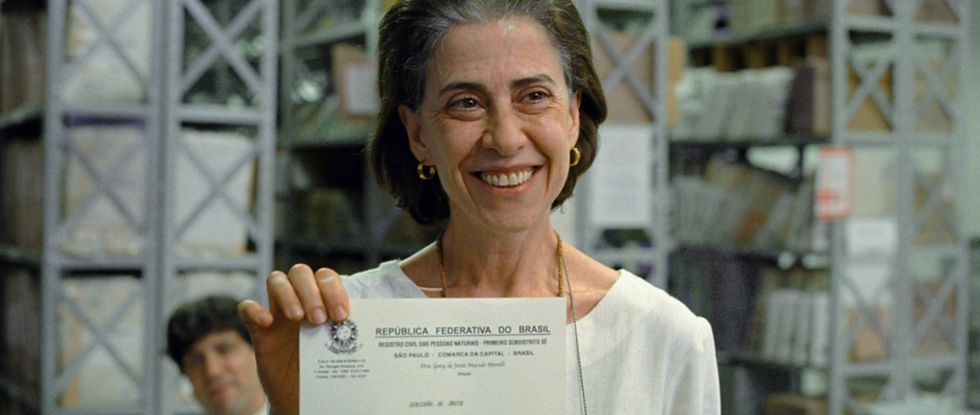
Twenty-five years later, Eunice, now a well-known educator and human rights activist, receives a phone call: her husband’s death certificate has finally arrived. What might sound disheartening to others brings Eunice a sense of solace. The document confirms on paper what they had known all along, granting the Paiva family official recognition and relief. After decades of uncertainty, the state can no longer deny what it once tried to erase. Watching the scene feels like finally exhaling after holding one’s breath for years. When asked whether the government has more urgent concerns than revisiting past injustices, she responds firmly: “No. I think it is necessary to compensate the families, and to do the most important thing, to clarify and judge… If that doesn’t happen, they continue to be committed with impunity.” Her insistence makes clear that memory alone is not enough; justice requires accountability.
I’m Still Here confronts the brutality of the past, while emphasizing the importance of resilience and hope when all seems lost. Rather than portraying resilience as quiet endurance, the film frames it as action—demanding recognition, and refusing erasure. Eunice Paiva does not allow her husband’s disappearance to define her family solely through loss. Across decades, what sustains them is a steadfast commitment to memory, love, and justice. Above all, the film depicts a family that, in the face of hardship, never loses the love that keeps them alive and remains resolute in their pursuit of justice and acknowledgment.
Comments