

A Portrait of the History of Abortion
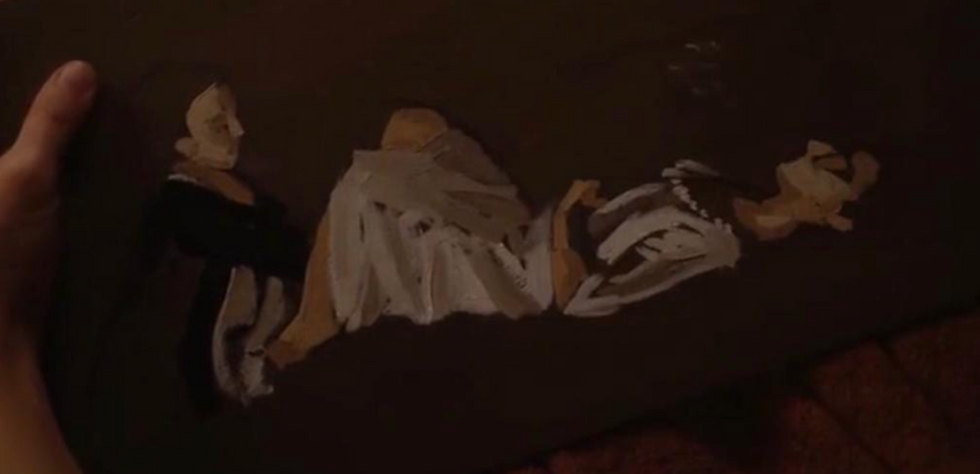
A painting made by Marianne of the abortion scene
Céline Sciamma’s Portrait of a Lady on Fire is an absolutely stunning film. It follows two women, Marianne and Héloïse—one tasked with painting the other—and against the backdrop of 18th-century France; they fall in love. Yet a third character quietly adds to the emotional landscape of the story. Sophie, the housemaid, discovers she is pregnant, and Marianne and Héloïse help her seek an abortion. They first give Sophie an herbal tea and have her hang from her arms to encourage a miscarriage. When that fails, they bring her to a local healer, who feeds her a herbal poultice and performs an abortion. The scene is intentional in its simplicity. There is no spectacle, no moral panic, no attempts to stop her. Sophie is simply a woman who does not want to be pregnant—and she is able to “take care of it.”
It is fitting that the film takes place in France, the first country to later enshrine the right to abortion in its constitution. In contrast, the United States’ recent overturning of Roe v. Wade returned abortion rights to individual states, resulting in criminal bans across much of the country. Yet, as in France, abortion in early America was not always the contentious issue it has become.
Abortion was not outlawed in the United States until the mid-1800s. Before then, abortions were common and widely accessible for women who did not want to carry a pregnancy. Under common law, abortions were permitted until “quickening,” the point at which fetal movement is first felt, typically around four months. In the late 1700s and early 1800s, reproductive care was largely unregulated, and herbal methods for ending pregnancies were openly used. Up until the Civil War, men were mostly uninvolved in gynecological and obstetric practices; reproductive knowledge and care were overwhelmingly women’s domains.
The earliest restrictions on abortion targeted Black women—the same women who often provided reproductive care, including abortions, to the white women they served. After the Civil War, abortion remained legal for most women, but enslaved Black women faced growing prohibitions. Their abortions, when they occurred, were forced underground.
What began as an ordinary part of life soon became subject to intense regulation. In 1857, the American Medical Association launched a letter-writing campaign to ban abortion, an effort tied to their larger goal of consolidating professional authority over reproductive health. This moment also marked the institutional shift toward claiming that life begins at conception rather than at first fetal movement. Between 1860 and 1880, roughly forty anti-abortion laws were enacted, and by the end of the century, abortion was illegal in nearly every state.

Today, in 2025, thirteen states impose total abortion bans and twenty-eight enforce bans linked to gestational limits. These restrictions pose severe dangers for people with life-threatening pregnancies; in many states, a patient’s condition must deteriorate before an abortion can be legally performed without risking criminal prosecution. The burden falls heaviest on women living in states like Texas and Louisiana, where traveling over 1,000 miles may be the only way to obtain emergency care.
What began as a routine, uncontroversial component of reproductive life has transformed into one of the most polarizing political battles in modern America. Yet at its core, abortion is not a political issue—it is, and has always been, fundamentally an issue of healthcare.
While browsing fertility treatment options in London, I came across this clinic and decided to read through it. The content felt calm and easy to follow, which made a big difference compared to some other sites. It gave me a clearer idea of what kind of support is available. I’m not ready to decide yet, but it left a positive impression. https://lunafertility.co.uk/